
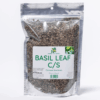
Description
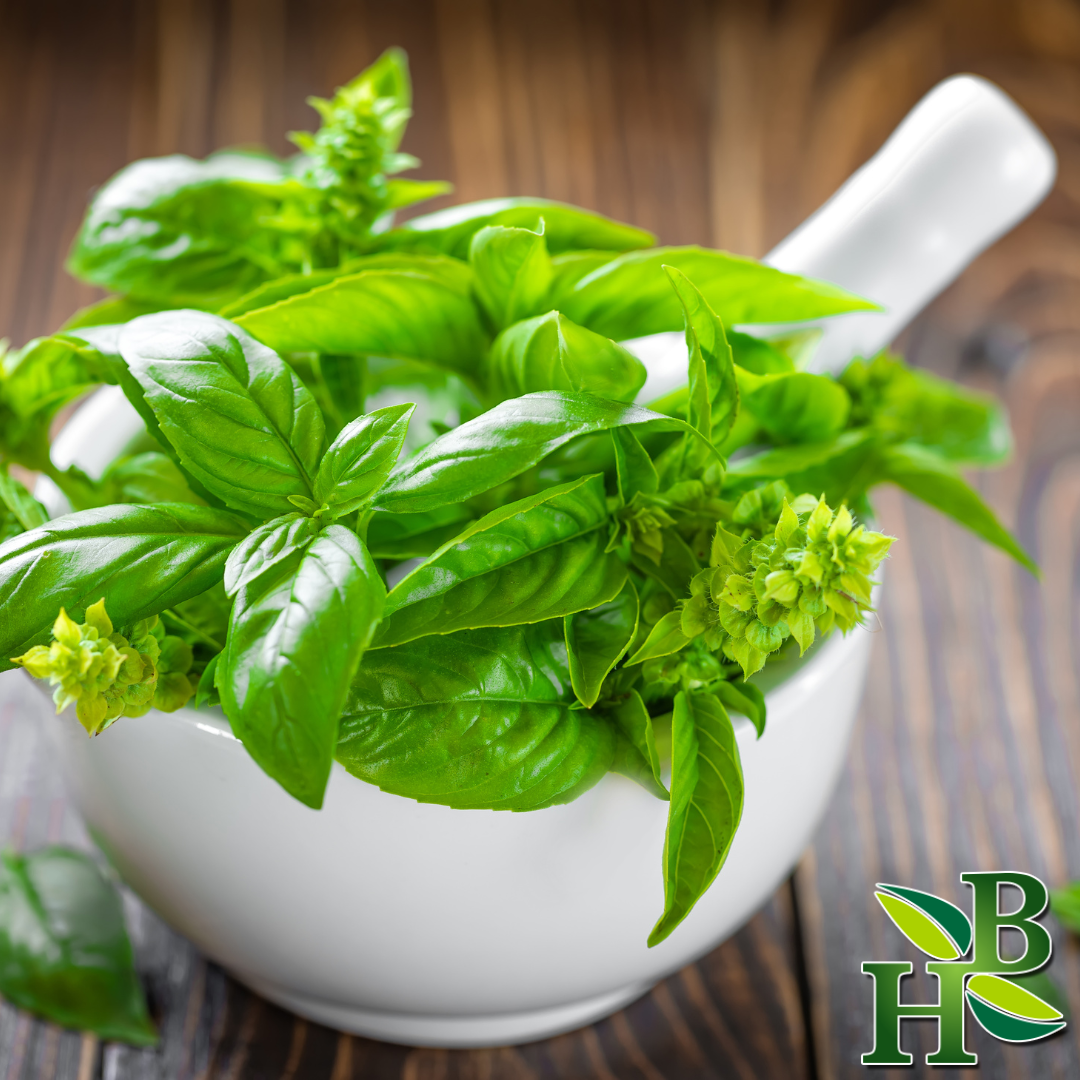
Habitat & Cultivation : Basil is likely native to India, and today, there are over 150 varieties grown worldwide for their unique flavor and essential oil. The leaves and flowering tops are harvested as the plant begins to flower.
Parts Used : Leaves, flowering tops, essential oil.
Constituents : Basil contains a volatile oil (about 1%), which consists principally of linalool and methylchavicol, along with small quantities of methyl cinnamate, cineole and other terpenes.
History & Folklore : Dioscorides, in his 1st-century CE Materia Medica, documented the African belief that consuming basil alleviated the pain from a scorpion’s sting. During Roman times, basil was employed to alleviate flatulence, counteract poisoning, act as a diuretic, and stimulate breast-milk production. Additionally, basil has a historical presence in Ayurvedic medicine.
Medicinal Actions & Uses : Basil primarily influences the digestive and nervous systems, providing relief from flatulence, stomach cramps, colic, and indigestion. It is effective in preventing or alleviating nausea and vomiting and has vermifuge properties, aiding in the elimination of intestinal worms.
ADDITIONAL INFORMATION
| Weight | 0.25 lbs |
|---|---|
| Dimensions | 9 × 4 × 4 in |
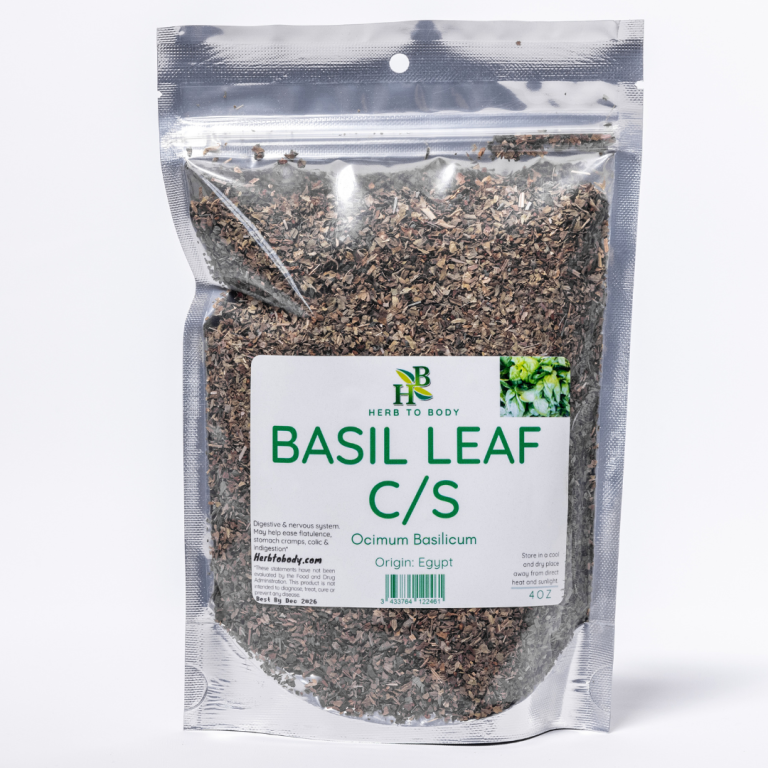
| Botanical Name | Ocimum basilicum |
| Origin | Egypt |
| Size | 4oz |
| Use | Use alone or in combination with other herbs to season cooked foods and salads. Basil is also used to make flavored oils and vinegars. |
| Processing | Cut & Sifted |
| Appearance & Aroma | Medium green with a strong aroma. |
| Active compounds | 1,8 cineol, linalool, eugenol |
| Storage tips | Store in an airtight container away from direct light, heat and moisture. |


Reviews
There are no reviews yet.