
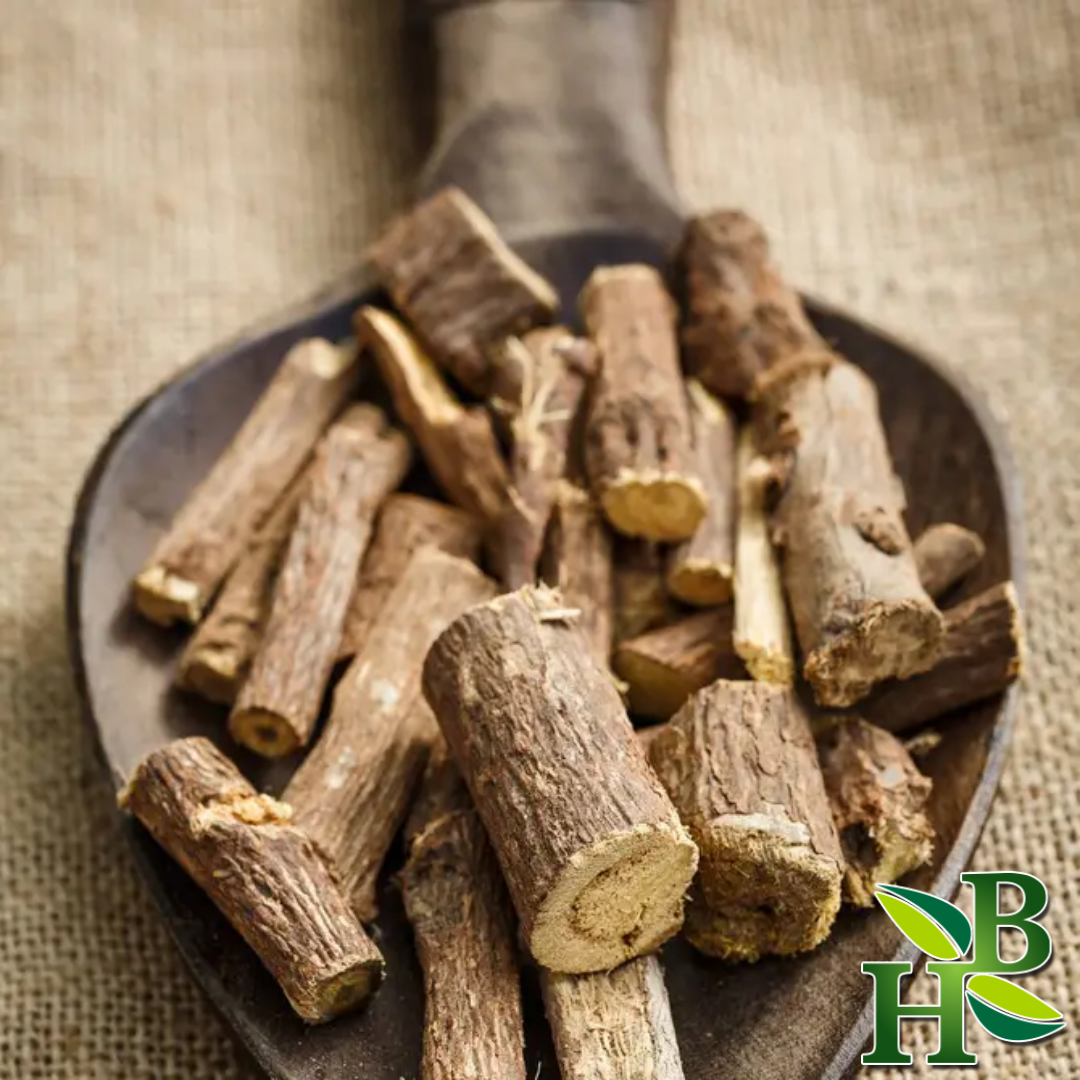
Description
Habitat & Cultivation : Licorice is found in the wild in southeastern Europe and southwestern Asia, and it is currently under widespread cultivation. The plant is propagated through root division in either autumn or spring. The roots of 3- to 4-year-old plants are typically unearthed in late autumn.
Key Constituents
- Triterpene saponins (glycyrrhizin, up to 6%)
- Isoflavones (liquiritin, isoliquiritin, formononetin)
- Polysaccharides
- Phytosterols
Key Actions
- Anti-inflammatory
- Expectorant
- Demulcent
- Adrenal agent
- Mild laxative
Research
- Adrenal agent : Studies indicate that when glycyrrhizin undergoes breakdown in the digestive system, it exhibits anti-inflammatory and anti-arthritic effects akin to hydrocortisone and other corticosteroid hormones. It promotes the production of hormones by the adrenal glands and diminishes the breakdown of steroids by the liver and kidneys.
- Glycyrrhizin : Research in Japan in 1985 showed that glycyrrhizin was effective in the treatment of chronic hepatitis and liver cirrhosis.
- Protective mucus : Licorice, in its entirety, decreases stomach secretions while generating a dense protective mucus for the stomach lining. This property renders it a valuable treatment for inflammatory stomach conditions.
- Isoflavones : The isoflavones are known to be oestrogenic. Licorice is often used to treat menopausal symptoms, including hot flushing.
Traditional & Current Uses
- Traditional uses : Licorice has long been valued for its medicinal uses. It was taken in ancient Greece for asthma, chest problems and mouth ulcers.
- Soothing herb : Inflammatory disorders affecting the digestive system, including conditions like mouth ulcers, gastritis, peptic ulceration, and excessive acid-related issues, find relief in Licorice’s demulcent and anti-inflammatory characteristics. These properties also prove beneficial for various chest ailments, arthritis, inflamed joints, and certain skin issues. Licorice is additionally soothing for irritated eyes.
- Adrenal stimulation : Licorice stimulates the adrenal glands, helping in Addison’s disease, where the adrenal glands cease to function normally.
- Constipation : Licorice is useful as a gentle laxative.
ADDITIONAL INFORMATION
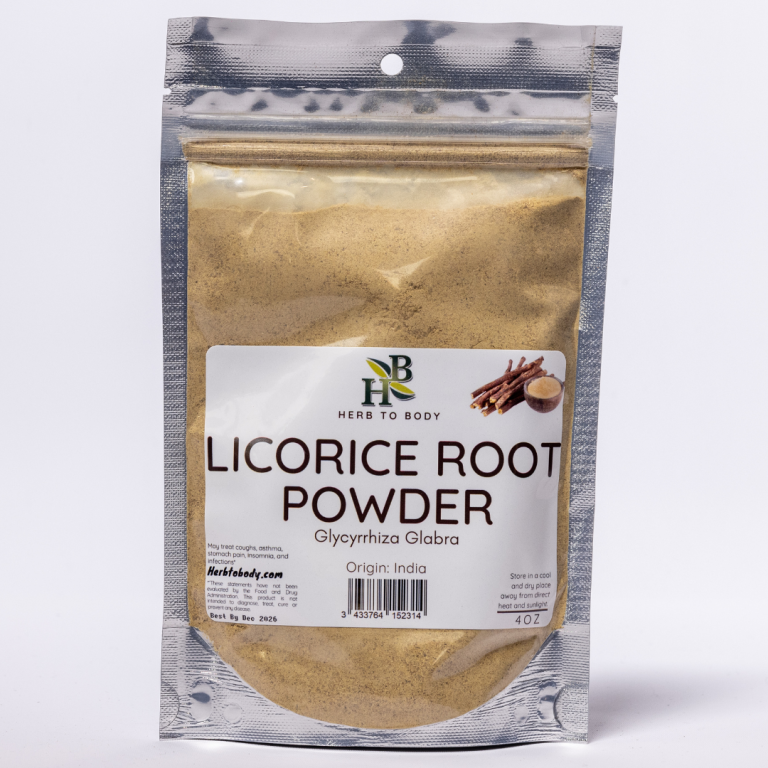
| Weight | 0.25 lbs |
|---|---|
| Botanical Name | Glycyrrhiza glabra |
| Origin | India |
| Size | 4oz |
| Use | Use sparingly to add flavor to baked goods, puddings, syrups and confections. Powdered licorice root is also encapsulated as a dietary supplement. |
| Processing | Powder |
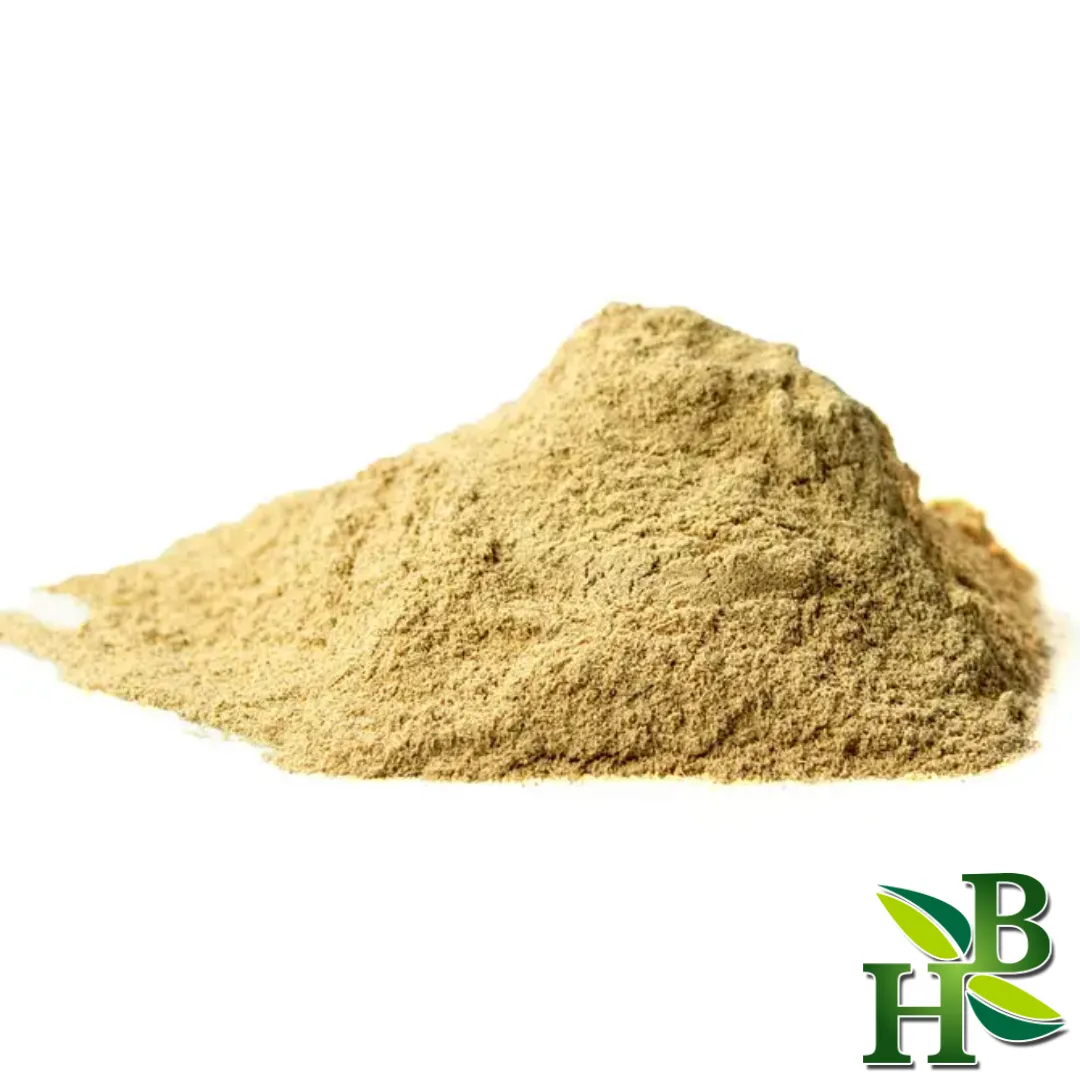
| Appearance & Aroma | Fine powder with an anise-like scent |
| Active compounds | Glycyrrhizin (glycyrrhizic acid) |
| Storage tips | Store in a sealed container in a cool, dark place. |
| Industrial | Licorice powder is used as a flavoring agent to improve the taste of certain pharmaceutical medications. |
| Safety | Consult your physician before using licorice root if you have high blood pressure or heart disease. |
Reviews
There are no reviews yet.